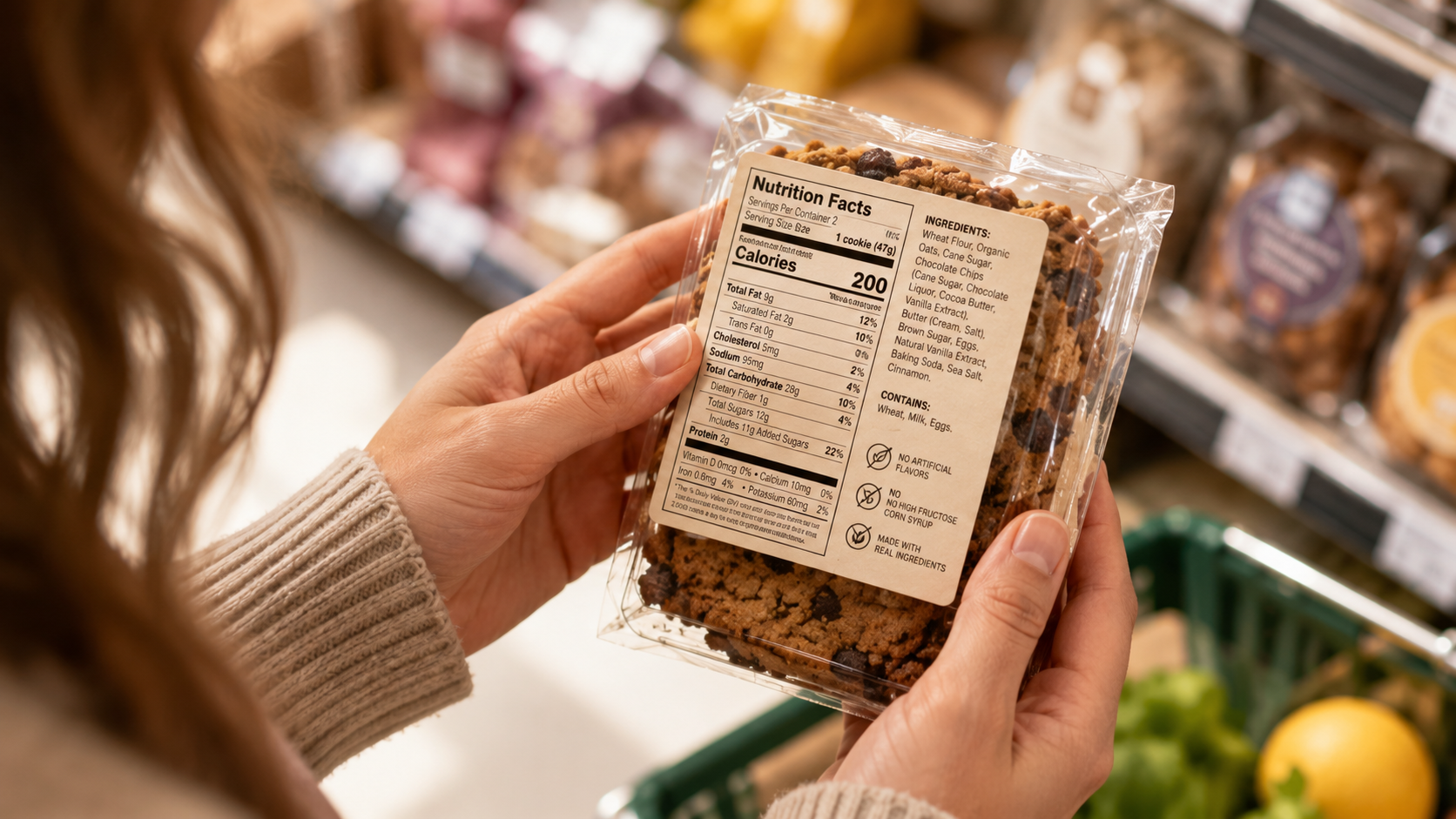
Edible labels carry important information, and knowing how to read them correctly is the difference between a product that delivers what you were hoping for and one that surprises you in a way you were not prepared for. The format of edible labelling has improved significantly as the hemp-derived and cannabis product markets have matured, but label literacy is still an underrated skill that even experienced consumers sometimes get wrong.
The label is the only reliable source of information you have about what is in the product before you try it. The flavour, the description on the website, and the visual appearance tell you almost nothing about the actual content. The label is where the real product information lives, and spending two minutes reading it thoroughly before purchasing is one of the most impactful things you can do to ensure a positive experience.
Quick Answer: To read an edible label, look first at the total THC and CBD content per serving and per package, confirm the serving size and how many servings the package contains, check the cannabinoid source and type, review the ingredient list for any allergens or components relevant to you, and note any third-party testing information. The most common labelling errors involve confusing per-serving and per-package totals, which can lead to significant accidental over-consumption.
Total Cannabinoid Content: Per Serving Versus Per Package
This is the most important distinction on any edible label and the one most frequently misread. A label might show 100mg of THC prominently. That does not necessarily mean each serving is 100mg. It often means the entire package contains 100mg across multiple servings. If that package has ten servings, each serving is 10mg.
Always find both numbers: the total package content and the per-serving content. Then confirm the serving size: how many pieces, how many millilitres, or what portion of the product constitutes one serving. A brownie labelled as four servings at 5mg each totals 20mg. Eating the whole brownie means consuming 20mg, not 5mg.
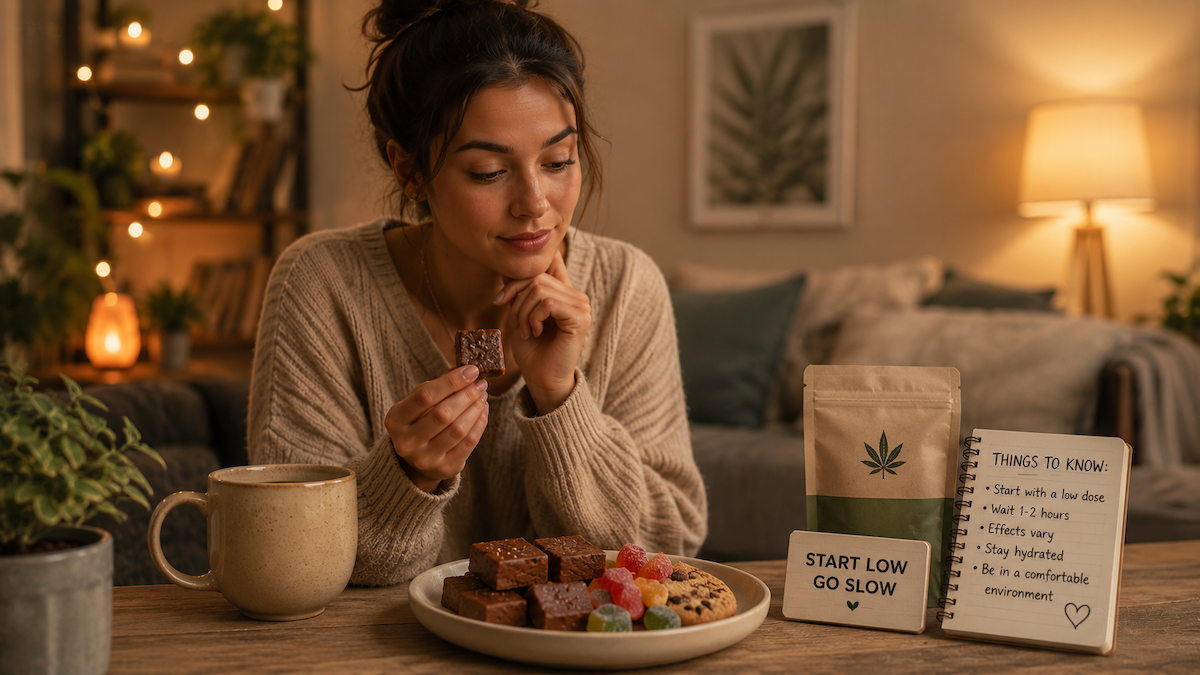
Knowing the right dose for your experience level makes this reading more meaningful: if you know that 5mg is your target dose, you can immediately assess whether a product’s serving size and serving count match what you need.
THC, CBD, and Other Cannabinoids
Quality edible labels specify not just the total cannabinoid content but the type of cannabinoid: delta-9 THC, CBD, delta-8 THC, CBG, CBN, and others all appear in different products. These cannabinoids have different effects, different potency profiles, and different legal statuses depending on your location.
Understanding hemp-derived THC versus CBD before reading a label helps you identify what you are actually buying: a THC-dominant product will produce psychoactive effects at threshold doses, while a CBD-dominant product will not, and a 1:1 blend will produce a combined effect that sits between the two.
Be alert to labels that list multiple cannabinoids without clearly specifying how much of each is present. A label that says ‘total cannabinoids: 50mg’ without breaking down the THC and CBD content separately provides limited useful information. Quality producers label each cannabinoid separately.
Source and Derivation
Hemp-derived THC and cannabis-derived THC are chemically similar but legally distinct in most US markets. The 2018 Farm Bill created a legal framework for hemp-derived products with less than 0.3 percent delta-9 THC by dry weight. Products labelled as hemp-derived that comply with this standard are federally legal; products derived from cannabis are subject to state law.
This distinction matters particularly when buying online or in states without full cannabis retail markets. A label that clearly states the cannabinoids are hemp-derived and provides a Certificate of Analysis from a third-party laboratory demonstrating compliance is a reliable indicator of a legitimately produced product. A label that is vague about the source of its cannabinoids warrants caution.
The Certificate of Analysis
The Certificate of Analysis (COA) is a third-party laboratory test result that confirms the actual cannabinoid content of the product, verifies the absence of heavy metals, pesticides, and residual solvents, and in some cases tests for microbial contamination. A COA is the quality standard document of the infused product industry, and reputable producers make it accessible for every product they sell.
On a physical label, the COA may appear as a QR code linking to the test results online. When buying online, the COA should be findable on the product page or available upon request. Any producer who cannot or will not provide a COA for a product they are selling is a producer worth buying from with significant caution, because the COA is the only independent verification that the product contains what it claims to contain.
Understanding how to approach dosing accurately starts with being able to trust the label, which is only possible when a COA exists to verify that the labelled dose matches the actual content.
Ingredient List and Allergens
The ingredient list on an edible is worth reading for the same reasons it is worth reading on any food product. Common allergens including tree nuts, peanuts, wheat, dairy, and eggs appear in many infused baked goods. The ingredient list is also where you can assess the quality of the product: whole ingredients like butter, eggs, cocoa, and vanilla versus a list heavy with stabilisers, artificial flavours, and preservatives tells you something about how the product was made.
For people with dietary restrictions, the ingredient list is non-negotiable reading. Gluten-free, vegan, and nut-free versions of infused products exist, but the label is the only reliable way to confirm whether a specific product meets a specific requirement. Marketing language like ‘clean ingredients’ is not a substitute for reading the list.
Expiration Date and Storage Instructions
Infused baked goods have a shelf life, and the expiration date indicates when the product is expected to be at its best for both food quality and cannabinoid potency. Cannabinoids degrade over time, particularly when exposed to heat, light, and air, which means an expired product may not only taste less fresh but may also be less effective than labelled.
Storage instructions matter for the same reason. Most infused baked goods should be stored in a cool, dry place away from direct sunlight. Some products, particularly those made with fresh ingredients or no preservatives, require refrigeration. Following the storage instructions is part of getting what the label promises from a product.
For first-time buyers in particular, what beginners most need to understand is that the label is not just regulatory compliance information: it is the practical roadmap to a good experience. Reading it before rather than after trying the product is one of the most basic forms of harm reduction available.
Frequently Asked Questions
What does ‘total THC’ mean on an edible label?
Total THC typically refers to the combined amount of THC and its precursor THCA that will convert to active THC when consumed. In hemp-derived products, this figure should be confirmed by a COA. On some labels, total THC and delta-9 THC are listed separately; delta-9 is the federally regulated form.
Why do two edibles with the same mg dose feel different?
The same dose of THC can feel different depending on the form of the product, the other ingredients it is combined with, the type of extraction used, whether it is a full-spectrum or isolate product, the individual consumer’s metabolism, and what they have eaten beforehand. Labels tell you the cannabinoid content, not how that content will interact with your specific physiology.
What should I do if a product has no COA available?
Ask the producer for one. A reputable company will provide it immediately. If no COA is available or if the company is evasive about providing one, that is a meaningful signal about product quality and compliance. Choosing a different product from a provider who is transparent about testing is the safer option.
Is 10mg of THC a high dose?
10mg is considered a moderate to high dose for beginners and a moderate dose for occasional consumers. The standard starting recommendation for new edible users is 2.5 to 5mg. For regular consumers with established tolerance, 10mg may be a comfortable single dose. For anyone unfamiliar with their own response, starting below 10mg is the safer approach.
Can I trust edible labels sold online?
Labels from reputable producers with accessible COAs are trustworthy within normal tolerances. Labels from products without COAs or from producers who are vague about sourcing and testing carry more uncertainty. The presence of a third-party COA with a batch number matching the product you are purchasing is the strongest indicator of label accuracy available.
The Bottom Line
Reading an edible label correctly is one of the most practical skills in the infused product world. Knowing how to find the per-serving dose, identify the cannabinoid type and source, locate the COA, and check the ingredient list turns a purchase decision into an informed one rather than a guess.
Blazed Bakery labels all products clearly with per-serving cannabinoid content and provides third-party testing documentation for every product. Browse the collection or reach out if you have questions about a specific product before purchasing.